
How to Choose the Right Travel Credit Card for You
Choosing the best travel credit card is a personal decision that requires careful consideration of your travel style and financial habits. This guide will help you navigate your options, from understanding the core mechanics to comparing different card types and redemption strategies, ensuring you find the perfect card for your travel style.
For a comprehensive overview of how travel credit cards work, read our hub article, A Complete Guide to Understanding Travel Credit Cards.
Step 1: Assess your travel goals and habits
Before you dive into a card comparison, consider your travel style and financial habits:
- How often do you travel? A premium card with a high annual fee may be worth it for frequent travelers, while a simpler, no-annual-fee card is better for occasional vacations.
- What is your spending style? Luxury vs. budget travel affects which card provides the most value.
- Do you have brand loyalty? If you consistently fly with one airline or stay at a specific hotel chain, a co-branded card can offer exclusive benefits.
- How do you pay your bills? Travel rewards cards usually have higher interest rates. Carrying a balance can negate rewards, so these cards are best for full monthly payers.
- Do you travel internationally? Foreign transaction fees can add up. The best travel cards have no foreign transaction fees.
Step 2: Understand the types of travel cards
Travel cards generally fall into two main categories:
- General travel rewards cards: Flexible points that can be transferred to airline/hotel partners or used to book travel through the issuer's portal.
- Best for: Travelers who want maximum flexibility and aren't loyal to a single brand.
- Co-branded cards: Issued in partnership with a specific airline or hotel chain, offering accelerated rewards and exclusive perks. See Navigating Co-Branded Travel Cards.
- Best for: Travelers with strong brand loyalty seeking perks like free checked bags, priority boarding, or annual free night awards.
Step 3: Compare rewards, benefits, and fees
Once you know your travel profile, compare these key features:
- Rewards rate: Points or miles earned per dollar spent, for travel and everyday purchases. Bonus categories like dining or groceries can accelerate earning.
- Sign-up bonus: One-time bonus for meeting early spending requirements; a great way to kickstart rewards.
- Annual fee: Assess if benefits like lounge access, travel credits, or free nights outweigh the cost.
- Redemption value: Not all points are equal. Transferring points to partners or using the issuer portal can maximize value.
- Travel protections: Trip cancellation/interruption, baggage delay, and rental car insurance provide peace of mind.
- Airport lounge access: Premium cards offer access to lounges for comfort and convenience.
For a deeper dive into perks, see Travel Credit Card Perks: Beyond Points and Miles.
Step 4: Redemption strategies: Maximizing your points
How you redeem rewards can make a huge difference in value. See Maximizing Transferable Points for Travel and Other Redemptions for more strategies.
- Transfer partners: Transfer points to airline or hotel partners for premium flights or stays.
- Booking through the travel portal: Simple way to book travel; some cards provide bonus value.
- Statement credits: Redeem points for credits, though this typically offers lower value.
Step 5: Put it all together: Finding your ideal card
Common traveler profiles:
- Luxury Traveler: Prioritizes comfort; high annual fee is worth it for lounge access, travel credits, and high premium travel rewards.
- Budget Traveler: Wants perks without high fees; consider no-annual-fee cards with decent rewards.
- Loyalty Traveler: Consistently flies/stays with one brand; co-branded cards provide most value.
- Flexible Traveler: Values freedom to choose different airlines/hotels; general travel rewards cards with transfer partners are best.
Final thoughts
Choosing the best travel credit card depends on your habits, spending, and discipline. Prioritize what matters most to you to find a card that helps achieve your travel goals.
Related Travel Credit Card Articles
Explore more in-depth travel card guides:
Everything you need to know about travel-focused cards. 💰 Maximizing Transferable Points
Make the most of points for flights, hotels, and more. 🌎 Travel Card Perks Beyond Points
Explore benefits like lounge access, insurance, and more. 🛠 Navigating Co-Branded Travel Cards
Learn how airline and hotel cards work best for you.
Examples of Travel Rewards Credit Cards
Below is a list of Travel Rewards Credit Cards available to apply for online.
Citi Strata℠ Card
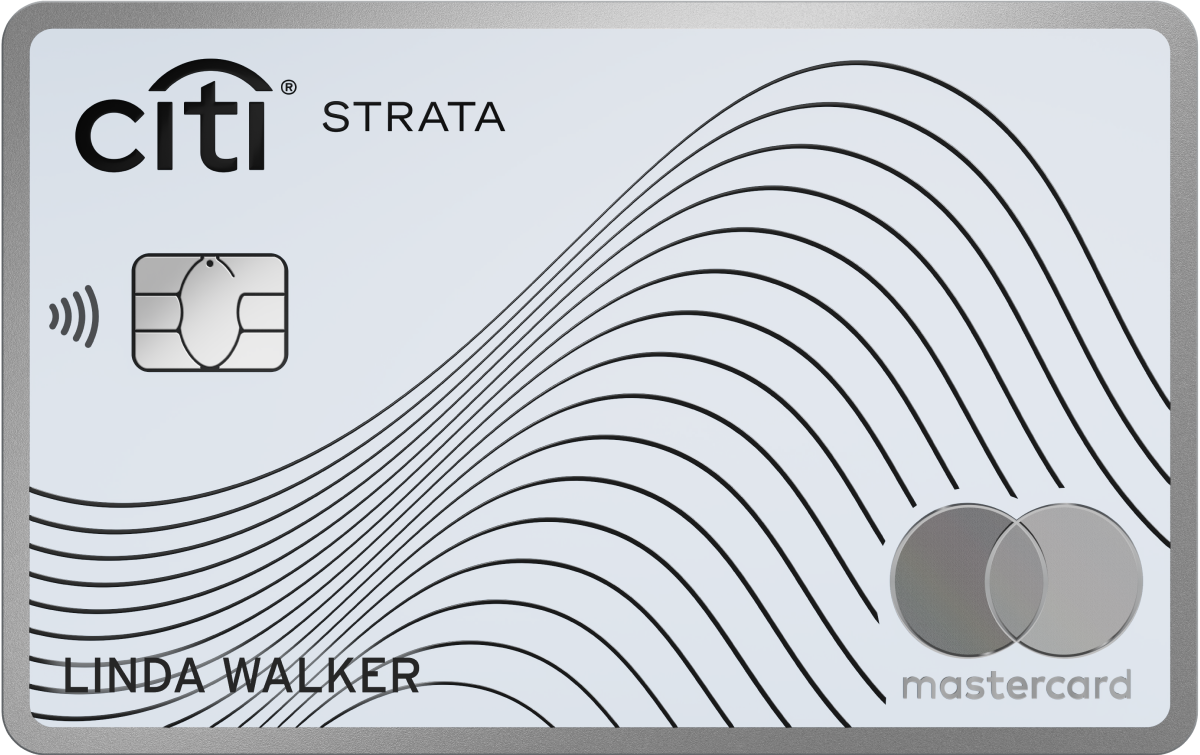
- Earn 20,000 bonus Points after spending $1,000 in the first 3 months of account opening.
- 0% Intro APR on balance transfers and purchases for 15 months; after that, the variable APR will be 18.74% - 28.74%, based on your creditworthiness. There is an intro balance transfer fee of 3% of each transfer (minimum $5) completed within the first 4 months of account opening. After that, your fee will be 5% of each transfer (minimum $5).
- Earn 3 ThankYou® Points for each $1 spent in an eligible Self-Select Category of your choice (Fitness Clubs, Select Streaming Services, Live Entertainment, Cosmetic Stores/Barber Shops/Hair Salons, or Pet Supply Stores). Choose your eligible Self-Select Category on Citi Online or by calling customer service. The default Self-Select Category is Select Streaming Services.
- Earn 5 ThankYou® Points for each $1 spent on Hotels, Car Rentals and Attractions booked on Citi Travel® via cititravel.com; earn 3 ThankYou Points for each $1 spent at Supermarkets, on Select Transit purchases, and at Gas & EV Charging Stations.
- Earn 2 ThankYou® Points for each $1 spent at Restaurants; earn 1 ThankYou® Point for each $1 spent on All Other Purchases.
- No Annual Fee
Citi Strata Premier® Card
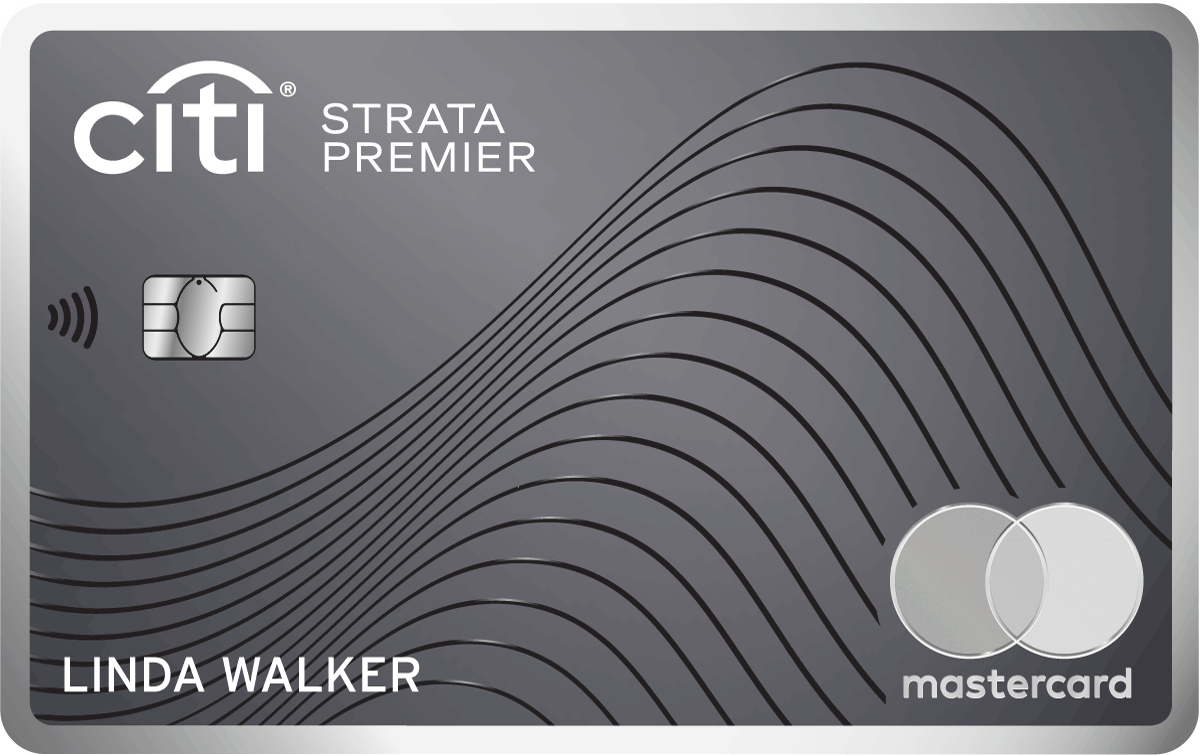
- Earn 60,000 bonus ThankYou® Points after spending $4,000 in the first 3 months of account opening, redeemable for $600 in gift cards or travel rewards at thankyou.com.
- Earn 10 Points per $1 spent on Hotels, Car Rentals, and Attractions booked on CitiTravel.com.
- Earn 3 Points per $1 on Air Travel and Other Hotel Purchases, at Restaurants, Supermarkets, Gas and EV Charging Stations.
- Earn 1 Point per $1 spent on all other purchases
- $100 Annual Hotel Benefit: Once per calendar year, enjoy $100 off a single hotel stay of $500 or more (excluding taxes and fees) when booked through CitiTravel.com. Benefit applied instantly at time of booking.
- No expiration and no limit to the amount of points you can earn with this card
- No Foreign Transaction Fees on purchases
Citi Strata Elite℠ Card
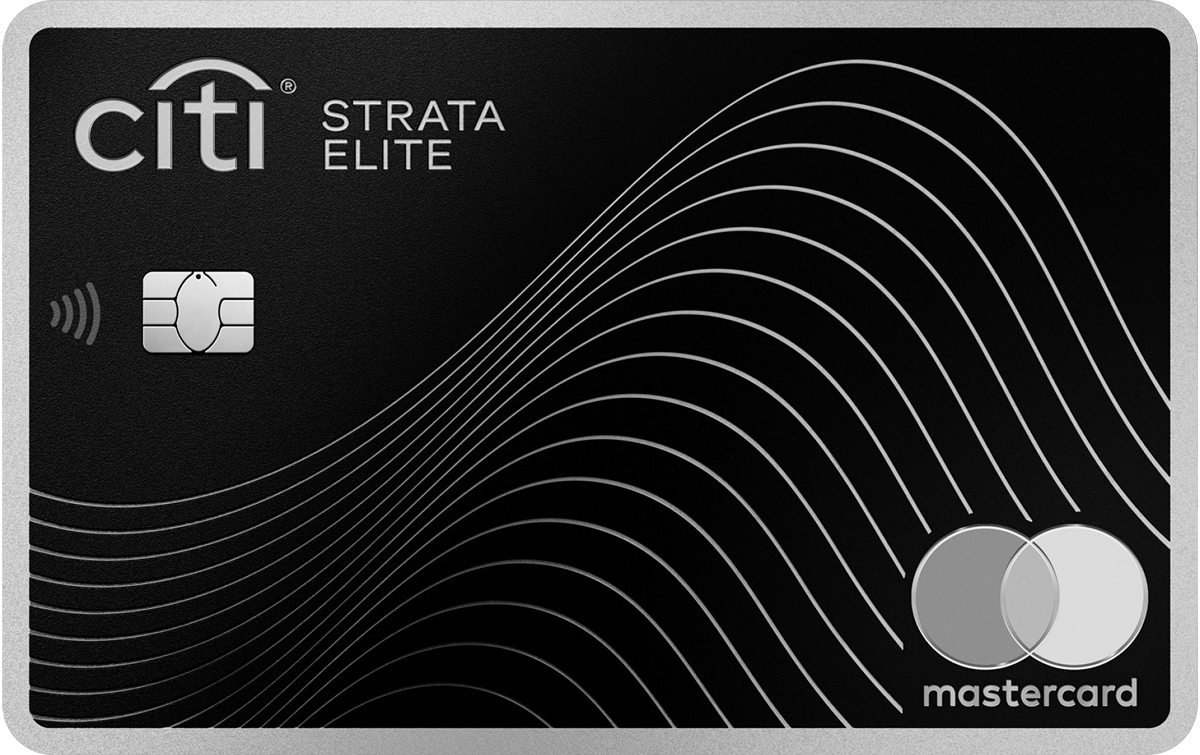
- Earn 75,000 bonus Points after spending $6,000 in the first 3 months of account opening.
- Earn 12 Points per $1 spent on Hotels, Car Rentals, and Attractions booked on cititravel.com and 6 Points per $1 spent on Air Travel booked on cititravel.com
- Earn 6 Points per $1 spent at Restaurants including Restaurant Delivery Services on CitiNights℠ purchases, every Friday and Saturday from 6 PM to 6 AM ET. Earn 3 Points per $1 spent any other time
- Earn 1.5 Points per $1 spent on All Other Purchases
- Up to $300 Annual Hotel Benefit: Each calendar year, enjoy up to $300 off a hotel stay of two nights or more when booked through cititravel.com.
- No Foreign Transaction Fees
Delta SkyMiles® Gold American Express Card
- Apply and find out your welcome offer: As High As 80,000 Bonus Miles + Earn a $250 Statement Credit after you spend $3,000 in purchases on your new Card within the first 6 months of Card Membership. You may not be eligible for the maximum welcome offer amount. Offer ends 11/04/2026.
- Enjoy a $0 introductory annual fee for the first year, then $150.
- Delta SkyMiles® Gold American Express Card Members get 15% off when using miles to book Award Travel on Delta flights through delta.com and the Fly Delta app. Discount not applicable to partner-operated flights or to taxes and fees.
- $120 Rideshare Credit: With your $120 Rideshare Credit, earn up to $10 back in statement credits each month after your first Card renewal when you use your Delta SkyMiles® Gold American Express Card for U.S. rideshare purchases with select providers. Enrollment required.
- $200 Delta Flight Credit: After you spend $10,000 in purchases on your Card in a calendar year, you can receive a $200 Delta Flight Credit to use toward future travel.
- When you use your Delta SkyMiles® Gold American Express Card, you can earn: 2X miles on Delta Purchases, 2X miles at restaurants, 2X miles at U.S. supermarkets, 1X miles on all other eligible purchases. Every mile you earn brings you closer to the places you want to go. Turn them into your next trip, use them for seat upgrades, and more.
- Check your first bag for free on Delta flights worldwide and get your second bag free when flying domestically.
- $100 Delta Stays Credit: Get up to $100 back per year as a statement credit after using your Delta SkyMiles® Gold American Express Card to book prepaid hotels or vacation rentals through Delta Stays on delta.com.
- Receive Zone 5 Priority Boarding on Delta flights; board early, stow your carry-on bag and settle in sooner.
- Want even more flexibility? Take up to $50 off the cost of your flight for every 5,000 miles you redeem with Pay with Miles when you book on delta.com.
- Receive a 20% savings in the form of a statement credit on eligible Delta in-flight purchases after using your Card.
- No Foreign Transaction Fees. Enjoy international travel without additional fees on purchases made abroad.
- Send money, split purchases, and focus on the moments that matter – with Send & Split®. Powered by Venmo and PayPal. Enrollment Required. Terms apply.
- Terms Apply.
- CLICK HERE TO APPLY ONLINE
American Express® Gold Card
- You may be eligible for as high as 100,000 Membership Rewards® Points after you spend $8,000 in eligible purchases on your new Card in your first 6 months of Card Membership. Welcome offers vary and you may not be eligible for an offer. Apply to know if you’re approved and find out your exact welcome offer amount – all with no credit score impact. If you’re approved and choose to accept the Card, your score may be impacted.
- Earn 4X Membership Rewards® points per dollar spent on purchases at restaurants worldwide, on up to $50,000 in purchases per calendar year, then 1X points for the rest of the year.
- Earn 4X Membership Rewards® points per dollar spent at US supermarkets, on up to $25,000 in purchases per calendar year, then 1X points for the rest of the year.
- Earn 5X Membership Rewards® points on prepaid hotel stays booked through AmexTravel.com or the Amex Travel App™.
- Earn 3X Membership Rewards® points on flights booked through AmexTravel.com, the Amex Travel App™, or purchased directly from airlines.
- Earn 2X Membership Rewards® points on prepaid car rentals booked through AmexTravel.com or the Amex Travel App™ and cruises booked and paid through AmexTravel.com.
- Earn 1X Membership Rewards® point per dollar spent on all other eligible purchases.
- Pay It® lets you tap in the American Express® App to quickly pay for small purchase amounts throughout the month and still earn rewards the way you usually do. Plan It® gives you the option to split up big purchases into equal monthly payments with a fixed fee. You’ll know upfront exactly how much you’ll pay.
- $120 Dining Credit: Earn up to a total of $10 in statement credits monthly when you pay with the Gold Card at Grubhub (including Seamless), Buffalo Wild Wings, Five Guys, The Cheesecake Factory, and Wonder. This can be an annual savings of up to $120. Enrollment required.
- $100 Resy Credit: Get up to $100 in statement credits each calendar year at over 10,000 qualifying U.S. Resy restaurants after you pay for eligible purchases with the American Express® Gold Card. That’s up to $50 in statement credits semi-annually. Enrollment required.
- $84 Dunkin' Credit: Earn up to $7 in monthly statement credits after you pay with the American Express® Gold Card at U.S. Dunkin’ locations. Enrollment required.
- $120 Uber Cash on Gold: Enjoy up to $120 in Uber Cash annually with your Gold Card. Just add your Card to your Uber account and you'll get $10 in Uber Cash each month to use on orders and rides in the U.S. when you select an Amex Card for your transaction.
- Enjoy complimentary Hertz Five Star® Status benefits like skipping the counter at select locations, adding an additional driver at no additional cost*, and vehicle upgrades**. Benefit enrollment and Hertz Gold+ registration are required. *Additional drivers must meet standard rental qualifications and must be a spouse or domestic partner to qualify as complimentary. Other additional drivers subject to fees. **Benefits are subject to availability and vary by location. Additional Hertz program Terms and Conditions including age restrictions apply.
- Book two nights or more with The Hotel Collection through AmexTravel.com or the Amex Travel App™ and receive a $100* credit towards eligible charges at over 1,400 upscale hotels worldwide. *Eligible charges vary by property.
- Book your travel through the Amex Travel App™ with added peace of mind – backed by American Express® service and support. Only for American Express® Card Members.
- Whenever you need us, we're here. Our Member Services team will ensure you are taken care of. From lost Card replacement to statement questions, we are available to help 24/7.
- No Foreign Transaction Fees.
- Annual Fee is $325.
- Terms Apply.
- CLICK HERE TO APPLY ONLINE
American Express Platinum Card®
- You may be eligible for as high as 175,000 Membership Rewards® points after you spend $12,000 in eligible purchases on your new Card in your first 6 months of Card Membership. Welcome offers vary and you may not be eligible for an offer. Apply to know if you’re approved and find out your exact welcome offer amount – all with no credit score impact. If you’re approved and choose to accept the Card, your score may be impacted.
- Get more for your travels with 5X Membership Rewards® points on all flights and prepaid hotel bookings through American Express Travel®, including Fine Hotels + Resorts® and The Hotel Collection bookings. You earn 5X points on flights purchased directly from airlines or through American Express Travel® on up to $500,000 on these purchases per calendar year.
- With over 1,550 airport lounges - more than any other credit card company on the market* - enjoy the benefits of the Global Lounge Collection, over $850 of annual value, with access to Centurion Lounges, 10 Delta Sky Club visits (subject to visit limitations) when flying on an eligible Delta flight, Priority Pass™ membership (enrollment required), and other select partner lounges. *As of 01/2026
- $200 Uber Cash + $120 Uber One Credit: With the Platinum Card® you can receive $15 in Uber Cash each month plus a bonus $20 in December when you add your Platinum Card® to your Uber account to use on rides and orders in the U.S when you select an Amex Card for your transaction. Plus, when you use the Platinum Card® to pay for an auto-renewing Uber One membership, you can get up to $120 in statement credits each calendar year. Terms apply.
- $300 Digital Entertainment Credit: Experience the latest shows, news and recipes. Get up to $25 in statement credits each month when you use your Platinum Card® for eligible purchases on Disney+, a Disney+ bundle, ESPN streaming services, Hulu, The New York Times, Paramount+, Peacock, The Wall Street Journal, YouTube Premium, and YouTube TV when you purchase directly from one or more of the providers. Enrollment required.
- $600 Hotel Credit: Get up to $300 in statement credits semi-annually on prepaid Fine Hotels + Resorts® or The Hotel Collection* bookings through American Express Travel® using the Platinum Card®. *The Hotel Collection requires a minimum two-night stay.
- $400 Resy Credit + Platinum Nights™ by Resy: Get up to $100 in statement credits each quarter when you use the Platinum Card® to pay for eligible purchases with Resy, including dining purchases at over 10,000 qualifying U.S. Resy restaurants. Enrollment required. As a Platinum Card® Member you have special access to reservations on select nights at participating sought after Resy restaurants in select cities through Platinum Nights™ by Resy. Simply add your Platinum Card® to your Resy profile to book your reservation.
- $219 CLEAR+ Credit: CLEAR+ helps get you to your gate faster by using your face to verify you are you at 55+ airports nationwide. You can cover the cost of a CLEAR+ Membership* with up to $219 in statement credits per calendar year after you pay for CLEAR+ with your Platinum Card®. *Excluding any applicable taxes and fees. Subject to auto-renewal.
- $200 Airline Fee Credit: Select one qualifying airline and then receive up to $200 in statement credits per calendar year when incidental fees, such as checked bags and in-flight refreshments, are charged by the airline to the Platinum Card® Account. American Express relies on airlines to submit the correct information on airline transactions to identify incidental fee purchases. If you do not see a credit for a qualifying incidental purchase on your eligible Card after 8 weeks, simply call the number on the back of your Card. Qualifying airlines are subject to change. See terms & conditions for more details.
- Start your vacation sooner and keep it going longer. When you book Fine Hotels + Resorts® through American Express Travel®, enjoy noon check-in, when available, and guaranteed 4PM late check-out.
- $300 lululemon Credit: Enjoy up to $75 in statement credits each quarter when you use the Platinum Card® for eligible purchases at U.S. lululemon retail stores (excluding outlets) and lululemon.com. That’s up to $300 in statement credits each calendar year. Enrollment required.
- $155 Walmart+ Credit: Get up to a $12.95* statement credit back each month after you pay for a monthly Walmart+ membership (subject to auto-renewal) with your Platinum Card®. *Up to $12.95 plus applicable taxes on one membership fee.
- Whenever you need us, we're here. Our Member Services team will ensure you are taken care of. From lost Card replacement to statement questions, we are available to help 24/7.
- $895 annual fee.
- Terms Apply.
- CLICK HERE TO APPLY ONLINE
Found this guide helpful? Save this for later as you continue your financial journey!
Compare a variety of credit card offers.
FICO® Credit Scores
A FICO® Score is a proprietary credit score created by the Fair Isaac Corporation (FICO). About 90% of top U.S. lenders use it to make lending decisions.
FICO® Score Ranges:
- Exceptional: 800–850
- Very Good: 740–799
- Good: 670–739
- Fair: 580–669
- Poor: 300–579
FICO categorizes scores as Poor, Fair, Good, Very Good, and Exceptional.
What is a Credit Score?
A credit score is a three-digit number (300–850) predicting your creditworthiness. Lenders use it to evaluate risk and determine rates and terms for credit.
Why it matters: A higher score can help you qualify for loans and lower interest rates. A lower score can lead to higher borrowing costs or application denials.
FICO® Credit Score Facts
- Three-Digit Number: Summarizes your credit risk.
- Range: 300–850; higher scores = lower risk.
- Data Source: Uses your credit reports from Experian, Equifax, and TransUnion.
- Industry Standard: Lenders rely on FICO for mortgages, auto loans, and credit cards.
Note: Credit scores reflect your creditworthiness but do not guarantee approval for any credit product.
Security Notice: All participating issuers use secure application systems protected by Transport Layer Security (TLS) encryption to help protect your information.
*See the online credit card applications for details about terms and conditions of credit card offers. Reasonable efforts are made to maintain accurate information. However all credit card information is presented without warranty. When you click on the " Apply Now " button you can review the credit card terms and conditions on the credit card issuer's web site.
Advertiser Disclosure: The card offers that appear on this site are from companies from which Gettingacreditcard.com may receive compensation when a customer clicks on a link, when an application is approved, or when an account is opened. This compensation may impact how and where products appear on this site (including, for example, the order in which they appear). Gettingacreditcard.com does not include all card companies or all card offers available in the marketplace.