
Are Chase Credit Cards Visa or Mastercard?
If you're wondering whether Chase credit cards are Visa or Mastercard, the answer is both. Chase currently lists 35 Visa credit cards and 7 Mastercard credit cards, so Visa is by far the more common network among Chase's current credit card offerings. The payment network depends on the specific Chase card.
The Chase Freedom Flex® Credit Card is one of Chase's Mastercard cards, but it is not the only one. Chase also offers Mastercard versions of several co-branded cards, including IHG, Aeroplan, DoorDash and Instacart cards. Chase maintains separate Visa and Mastercard listings, making it possible to see which network each current card uses.
Affiliate Disclosure: We are a professional review site that receives compensation from the companies whose products we review and recommend. If you click on a link, when an application is approved, or when an account is opened, we may earn a commission. We are independently owned, and the opinions expressed here are our own.
Does Chase Issue Visa or Mastercard Credit Cards?
Chase issues both Visa and Mastercard credit cards. It does not use only one payment network for all of its credit cards.
For example, Chase's current Visa credit card section includes cards such as the Chase Sapphire Preferred® Credit Card, the Chase Sapphire Reserve® Credit Card, and the Chase Freedom Unlimited® Credit Card.
Chase's Mastercard section includes cards such as the Chase Freedom Flex® Credit Card.
The payment network is therefore determined by the individual card rather than by Chase as a whole.
Which Chase Credit Cards Are Visa?
Chase currently lists a number of its credit cards as Visa cards. These include several of its major travel, cash back and credit-building products.
- Chase Sapphire Preferred® Credit Card
- Chase Sapphire Reserve® Credit Card
- Chase Freedom Unlimited® Credit Card
- Chase Freedom Rise® Credit Card
- United Explorer Card
- United Quest Card
Chase's Visa credit card page contains the current list of cards it offers on the Visa network. Because card offerings can change, the Chase website is the most reliable place to verify the network for a particular card.
Which Chase Credit Cards Are Mastercard?
Chase also issues credit cards on the Mastercard network.
For example, the Chase Freedom Flex® Credit Card is currently listed by Chase in its Mastercard credit card section.
Chase's Mastercard lineup can change over time, so a card's current payment network should be verified through Chase's website rather than relying on an older list published elsewhere.
Is Chase Freedom Unlimited® a Visa or Mastercard?
The Chase Freedom Unlimited® is currently a Visa credit card.
Chase lists the Chase Freedom Unlimited® Credit Card on its Visa credit card page. This means that the card operates on the Visa payment network.
If you're researching the card before applying, you can also read our Chase Freedom Unlimited® review, which covers its rewards, benefits and application considerations.
Is Chase Freedom Flex® a Visa or Mastercard?
The Chase Freedom Flex® Credit Card is currently a Mastercard.
Chase lists the Chase Freedom Flex® Credit Card in its Mastercard credit card section. This is a good example of why you cannot assume that all Chase credit cards use the same payment network.
Why Does It Matter Whether a Chase Card Is Visa or Mastercard?
For most everyday purchases, Visa and Mastercard are widely accepted payment networks, so the difference may not affect how you use your Chase credit card.
However, the payment network can matter in certain situations. Some merchants, benefits and payment services may have requirements or differences based on the network used by a card.
Chase's own rewards information also refers to Visa and Mastercard merchant coding when explaining how purchases are categorized for rewards. Chase notes that merchants who accept Visa or Mastercard credit cards are assigned merchant codes according to Visa or Mastercard procedures, and those codes can affect whether a purchase qualifies for a particular rewards category.
Can You Choose Visa or Mastercard When Applying for a Chase Card?
Generally, you choose the specific Chase credit card you want rather than choosing Visa or Mastercard separately.
If a particular Chase card is offered on the Visa network, applying for that card means you are applying for the Visa version. If another Chase card is offered on Mastercard, that card uses Mastercard.
Chase does not present Visa versus Mastercard as a separate option when you apply for a particular credit card. The network is associated with the specific card product.
Does Visa or Mastercard Affect Chase Credit Card Rewards?
The payment network and the rewards program are separate aspects of a Chase credit card.
For example, Chase determines rewards categories according to the merchant codes associated with purchases. Chase explains that merchants accepting Visa or Mastercard are assigned merchant codes based on the products and services they primarily sell.
That means the fact that a Chase card is a Visa or Mastercard does not by itself tell you what rewards you will earn. You should look at the specific Chase card's rewards terms to understand how purchases are categorized and rewarded.
How Can You Tell Whether Your Chase Card Is Visa or Mastercard?
The easiest way to identify the payment network for a Chase credit card is to look at the card itself. Visa and Mastercard cards display their respective network logos on the card.
You can also check the specific card on Chase's website. Chase separates its credit card offerings into Visa and Mastercard categories, which provides a current way to verify the network associated with a particular card.
Are Chase Credit Cards Visa or Mastercard? The Bottom Line
Chase credit cards can be either Visa or Mastercard. Chase issues cards on both payment networks, and the network depends on the specific credit card.
For example, the Chase Freedom Unlimited® is currently a Visa, while the Chase Freedom Flex® is currently a Mastercard. Chase also offers Visa cards in its Sapphire and other product families.
If you want to know whether a particular Chase credit card is a Visa or Mastercard, check the specific card on Chase's website rather than assuming that every Chase card uses the same network. Chase maintains separate Visa credit card and Mastercard credit card listings that can be used to verify the current network.
Ready to apply?
Chase Freedom Unlimited®
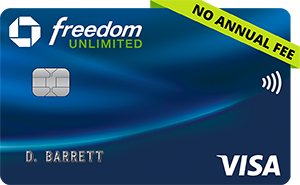
- Earn a $200 Bonus after you spend $500 on purchases in your first 3 months from account opening
- Enjoy 5% cash back on travel purchased through Chase Travel℠, our premier rewards program that lets you redeem rewards for cash back, travel, gift cards and more; 3% cash back on drugstore purchases and dining at restaurants, including takeout and eligible delivery service, and 1.5% on all other purchases.
- No minimum to redeem for cash back. You can use points to redeem for cash through an account statement credit or an electronic deposit into an eligible Chase account located in the United States!
- Enjoy 0% Intro APR for 15 months from account opening on purchases and balance transfers, then a variable APR of 18.24% - 27.74%.
- No annual fee – You won't have to pay an annual fee for all the great features that come with your Freedom Unlimited® card
- Keep tabs on your credit health, Chase Credit Journey helps you monitor your credit with free access to your latest score, alerts, and more.
- Member FDIC
See Card Terms and Conditions
Found this guide helpful? Save this for later as you continue your financial journey!
Compare a variety of credit card offers.
FICO® Credit Scores
A FICO® Score is a proprietary credit score created by the Fair Isaac Corporation (FICO). About 90% of top U.S. lenders use it to make lending decisions.
FICO® Score Ranges:
- Exceptional: 800–850
- Very Good: 740–799
- Good: 670–739
- Fair: 580–669
- Poor: 300–579
FICO categorizes scores as Poor, Fair, Good, Very Good, and Exceptional.
What is a Credit Score?
A credit score is a three-digit number (300–850) predicting your creditworthiness. Lenders use it to evaluate risk and determine rates and terms for credit.
Why it matters: A higher score can help you qualify for loans and lower interest rates. A lower score can lead to higher borrowing costs or application denials.
FICO® Credit Score Facts
- Three-Digit Number: Summarizes your credit risk.
- Range: 300–850; higher scores = lower risk.
- Data Source: Uses your credit reports from Experian, Equifax, and TransUnion.
- Industry Standard: Lenders rely on FICO for mortgages, auto loans, and credit cards.
Note: Credit scores reflect your creditworthiness but do not guarantee approval for any credit product.
Security Notice: All participating issuers use secure application systems protected by Transport Layer Security (TLS) encryption to help protect your information.
*See the online credit card applications for details about terms and conditions of credit card offers. Reasonable efforts are made to maintain accurate information. However all credit card information is presented without warranty. When you click on the " Apply Now " button you can review the credit card terms and conditions on the credit card issuer's web site.
Advertiser Disclosure: The card offers that appear on this site are from companies from which Gettingacreditcard.com may receive compensation when a customer clicks on a link, when an application is approved, or when an account is opened. This compensation may impact how and where products appear on this site (including, for example, the order in which they appear). Gettingacreditcard.com does not include all card companies or all card offers available in the marketplace.